
Events have changed fundamentally. They are no longer a single marketing channel but a central touchpoint in the customer journey. Used well, they create closeness and trust and help companies stand out. Thought through badly, they stay expensive, create a lot of work and often have little effect.
Today's event landscape is faster and more demanding than ever. If you want to win here, you need to understand the new rules and apply them consistently.
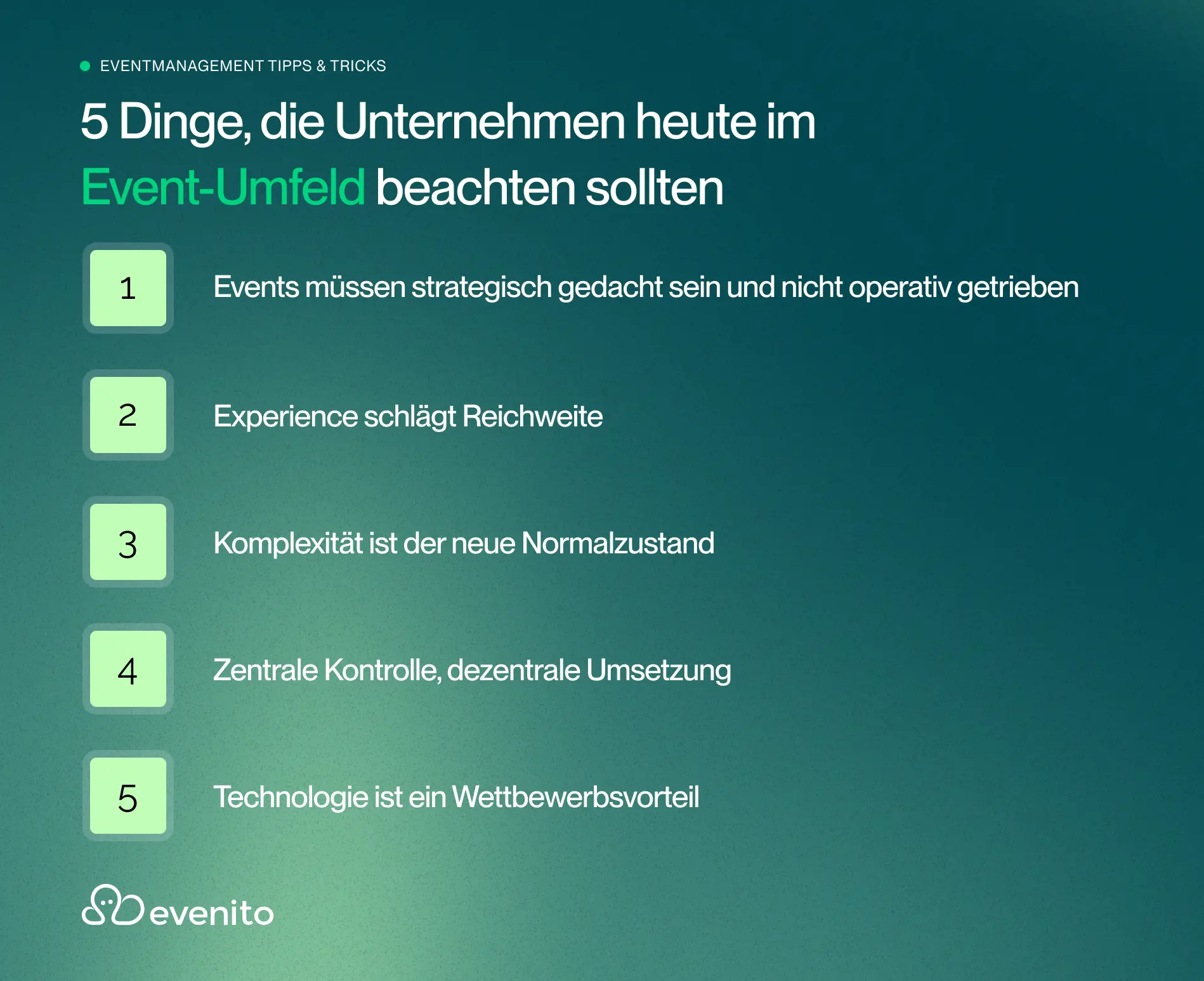
5 things companies should keep in mind today
There is a lot for companies to consider if they want to succeed with events today:
1. Events must be driven by strategy, not by operations
Successful events do not happen spontaneously. They contribute to clear goals: brand positioning, customer loyalty and business impact. This means every event needs a defined role within your overall communication.
The key question is no longer "Which event shall we run?" but "Why are we running this event, and for whom?"
Events can only reach their full impact when they are integrated into the overall marketing, sales and communication strategy.
2. Experience beats reach
Reach alone has become interchangeable, and attendees' attention is fleeting. What remains is the experience.
Events are one of the few touchpoints where real personal interaction is possible, and that is both their strength and their responsibility. Today, guests expect:
- relevant content
- personal communication
- a consistent brand presence
- smooth processes
Standardised invitations, generic communication and inconsistent experiences look unprofessional. To win, you need to design events deliberately as experiences that people want to attend, not as mandatory appointments.
3. Complexity is the new normal
The bigger and more professional events become, the greater the complexity behind the scenes: more stakeholders, more formats, more dependencies and higher requirements for data protection and brand.
What used to work with spreadsheets and email chains no longer scales. The coordination effort grows exponentially, and with it the potential for errors.
Successful organisations accept this reality. They do not try to avoid complexity but create structures that make it manageable.
4. Central control, decentralised execution
One of the most important rules in modern event management is central standards with decentralised organisation. Companies need to enable different departments or locations to organise events independently without losing control over data and processes.
This only works with clear guidelines and a central platform that provides orientation instead of getting in the way. Event teams then turn from operational bottlenecks into strategic enablers.
5. Technology is a competitive advantage
Event technology is no longer a nice-to-have. It is a prerequisite for scalability, quality and consistency. Tools do not make events better by themselves, but they create room to breathe: less manual work, fewer coordination loops and therefore fewer errors. That means more time for content, guests and the experience.
Companies that keep relying on fragmented tool landscapes pay for it in the long run with lost efficiency and inconsistent brand impact, both externally and in the form of frustration within their teams.
Conclusion: events win when they are rethought
Events are among the most effective touchpoints there are, provided they are used well. The companies that will win in the future are those that integrate events strategically, take experiences seriously and manage complexity professionally. The goal is not to be louder, faster or simply to do more, but to manage events more clearly and in a more structured way. Event management software like evenito makes that possible.