Key takeaways:
- The sponsorship paradox: companies invest large budgets in their on-site presence at events but neglect the quality of the digital invitation process.
- The first and most important touchpoint for building trust is the digital guest journey: invitation, event website and registration.
- Manual spreadsheet processes in hospitality management lead to a direct loss of control, outdated guest data and an impersonal first contact.
Why do expensive sponsorship experiences often fail at the invitation?
Many companies invest considerable sums in sponsorship rights, exclusive hospitality areas and VIP experiences. They want their brand to be visible and to stay in the minds of important business partners.
Yet it is precisely at the first direct touchpoint that they often cut corners: the invitation process and digital ticket access. Instead of high-quality, personalised communication, VIP guests frequently receive an impersonal forwarded email with confusing PDF attachments.
For the guest, the event then starts more like a dry, bureaucratic business appointment than an exclusive brand experience. This is where the classic sponsorship paradox arises: huge sums are spent on on-site visibility, while the guest receives hardly any attention beforehand.
Which touchpoints really shape the digital guest journey?
How people experience a brand does not begin at the check-in desk at the venue. The invitation, the registration and the information sent in advance shape brand perception significantly and set the standard for the entire event.
According to market data from Freeman, 77% of consumers say their trust in a brand increases significantly after interacting with it at a live event. To avoid losing that trust before the event even starts, all digital touchpoints need to work together seamlessly.
The most important touchpoints for a successful hospitality experience include:
- Personalised communication across all channels, instead of error-prone mass emails.
- A central event website in your corporate design that brings together all the important information.
- A smooth registration process that makes it easy to accept or decline.
- Mobile information on exclusive VIP access and on-site check-in on the day of the event.
These touchpoints show guests that they are valued. They do not have to click their way through email attachments, but experience a consistently professional brand experience from the very first second.
Why is manual hospitality management so error-prone?
From an organisational point of view, the processes behind an exclusive VIP experience are often highly complex and time-consuming. Sponsorship teams have to distribute ticket allocations manually to different departments, regional sales teams or external partners, who in turn invite their own customers and business partners.
Isolated spreadsheets and manually sent PDF tickets inevitably lead to a loss of control. As soon as guest data is sent back and forth by email, the lists are out of date within hours.
For large sponsorship engagements with many stakeholders, this coordination becomes an operational risk. The aim of addressing every guest personally and giving them a high-quality brand experience almost always fails in practice because there is no central overview of the process.
How does evenito automate hospitality management for sponsors?
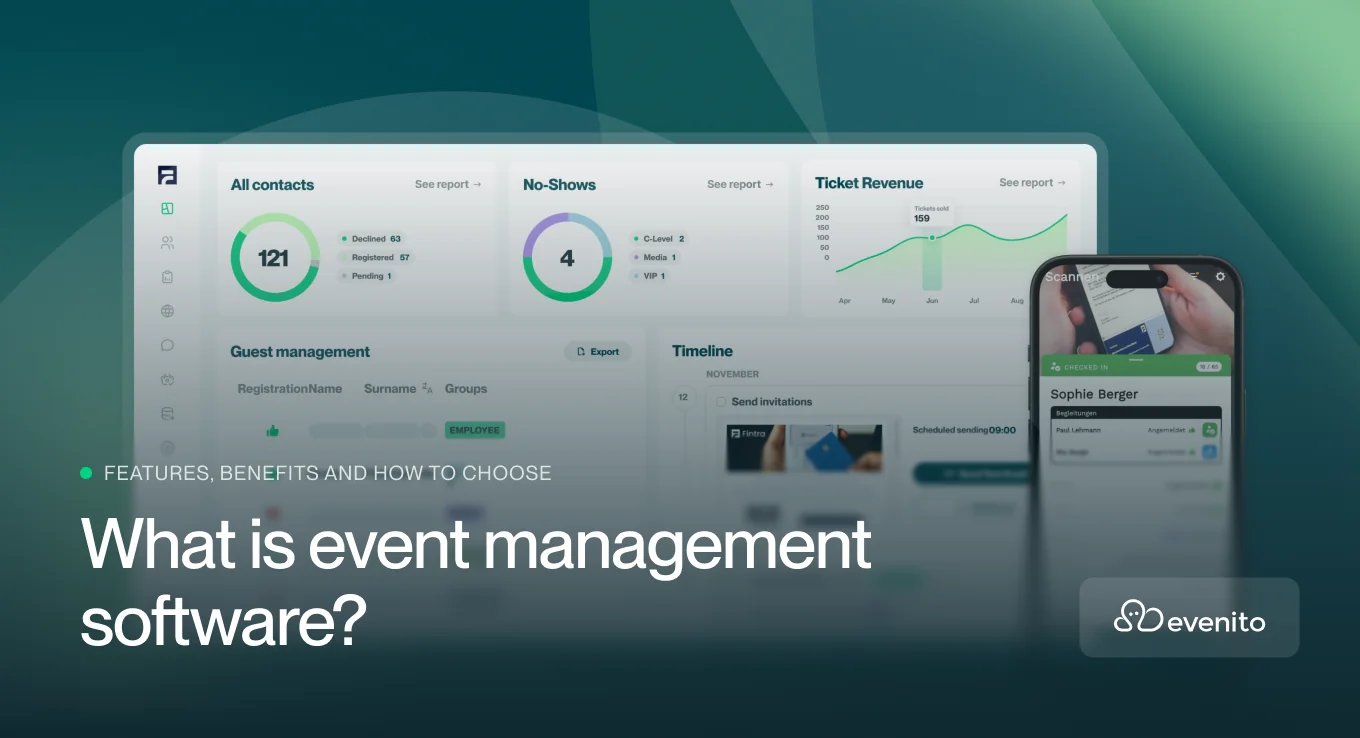
To eliminate this operational chaos, isolated solutions need to be replaced by connected systems. With the evenito Sponsoring Hub, ticket allocations and the related guest communication can be organised on one central platform.
The biggest lever of this solution is the principle of central control with decentralised execution. Sponsorship teams keep a complete overview, while internal contacts and sales teams manage the guests assigned to them independently.
Key features for successful hospitality management include:
- Decentralised host management: sales teams and hosts can invite, add and look after their assigned guests in the system themselves.
- Personalised communication: invitations, event websites and mobile tickets can be fully branded and personalised in your corporate design.
- Central live control: sponsorship managers can see bookings, available ticket allocations and final registrations in real time.
- Integration of external tickets: existing external tickets can also be included in the automated guest communication without errors.
What ROI does a well-designed digital guest journey deliver?
The digital guest journey should not be dismissed as an organisational side issue when large sums are flowing into sponsorship rights. The true quality of a hospitality experience does not first show at the venue or in the exclusive catering. It begins the moment the guest is invited digitally.
A real VIP experience deserves more than an unstructured standard email. Companies that want to create a first-class brand experience must think about the digital first contact from the start. Using connected event management software not only protects your team from manual chaos, it also ensures personal, error-free communication at scale.