
Hybrid events are here to stay and now form the strategic core of modern corporate event programs.
Hybrid event management software for enterprise teams is a central platform that seamlessly synchronizes physical on-site experiences and virtual streams. It bundles the entire event lifecycle — from registration and GDPR-compliant data processing to participant engagement and native CRM integrations — in a single system.
For large companies, this technology offers the opportunity to scale reach globally and make the impact of events measurable. But which software is really suitable to successfully implement this complexity at enterprise level? This buyer's guide shows the most important criteria.

Why do enterprise teams need specialized hybrid event management software?
hybrid events combine physical and digital experiences into an integrated overall concept. Local participants and virtual guests interact with the same content, speakers and networks, just via different channels.
What sounds simple is highly complex in practice. In large organizations in particular, several factors come together, such as:
- many parallel events
- different target groups and regions
- complex stakeholder structures
- high requirements for branding and personalization
However, many companies still work with a fragmented tool stack: CRM, email, Excel, webinar tools and various stand-alone solutions make event planning confusing and unnecessarily complex.
The results are:
- Media breaks along the entire guest journey
- inconsistent data
- a high level of manual effort
- poor scalability
Right here puts modern event management software to: It combines the planning, execution and analysis of an event in a central platform and thus creates the basis for scalable hybrid strategies.
How do you find the right event management software in 10 steps?
Step 1: How do you define strategic goals for hybrid event programs?
The most common mistake when choosing software is that teams compare features without clearly defining their actual goals. But especially with hybrid events, the technology must follow the strategy and not the other way around.
Typical goals of hybrid event programs are:
- an increase in reach (global & digital)
- Increase engagement, both locally and virtually
- Generate and qualify leads
- Make content usable in the long term
- Integrate sponsors and partners
- Make data usable for marketing and sales
For enterprise teams, there are additional aspects:
- Standardization across multiple event teams
- Integration into existing systems
- Measurability of ROI at program level
A structured approach helps enormously here: Translate your goals into specific requirements, KPIs and participant journeys. Only then does a software comparison really make sense.
Step 2: Scalability as a decisive factor
What works for smaller events often fails with enterprise programs. Scalability means more than just supporting many participants. It is about the ability to represent complex event landscapes in a stable way. That means:
- Thousands of concurrent participants
- multiple parallel sessions
- international events across time zones
- high load peaks during registrations or live sessions
Many tools are designed for smaller setups and then break down under real conditions.
What you should therefore pay attention to when choosing your hybrid event management software is:
- a verifiable performance at major events
- stable streaming infrastructure
- fast charging times worldwide
- reliable real-time features (chat, polls, etc.)
Especially for companies with frequent and recurring events, scalability is an important basic requirement and not just “nice to have”.
Step 3: Which security and compliance standards must software meet?
Hybrid events process sensitive data from participants, communication data, payment information and engagement data. These must be protected. For enterprise companies, there are therefore clear requirements that appropriate software must meet:
- GDPR compliance
- ISO standards (e.g. ISO 27001)
- Encrypting data (in transit & at rest)
- Role-based access control
- Single sign-on (SSO)
Security is not just an IT issue, but a clear trust factor for your brand. Anyone who doesn't exist at this stage risks reputation. A professional event system must integrate seamlessly into existing security architectures and at the same time be flexible enough to represent different roles and responsibilities.
Step 4: Which CRM and marketing integrations does event software need?
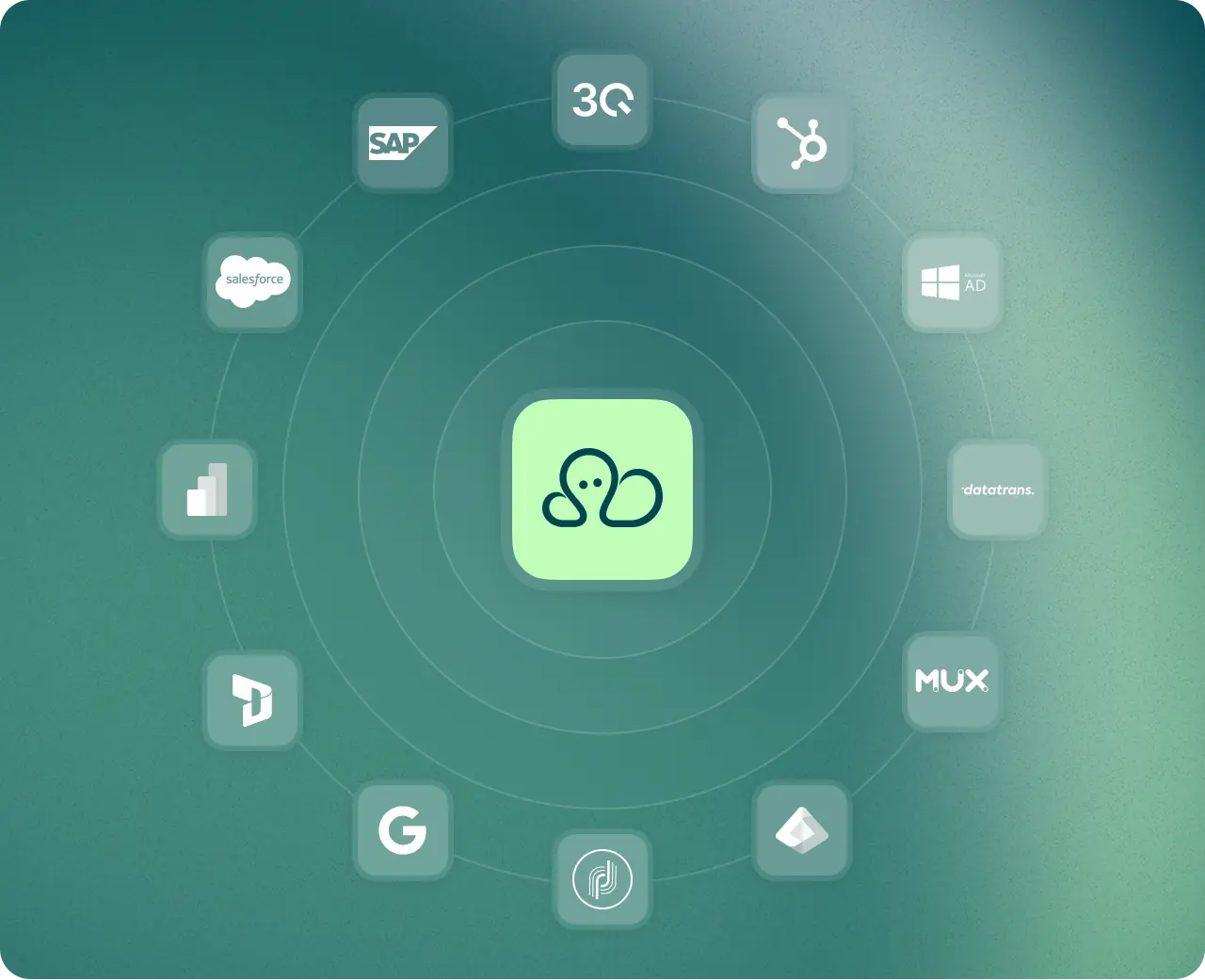
Hybrid events never stand alone, but are often part of a larger ecosystem.
Typical systems in an enterprise stack:
- CRM (such as Salesforce)
- Marketing automation (e.g. Marketo, HubSpot)
- email systems
- analytics tools
- Collaboration tools (such as Zoom, Teams)
Without proper integration, data silos or manual workarounds arise. This can result in inconsistent reports that cannot be properly evaluated. Modern platforms therefore rely on deep, native integrations instead of using CSV exports.
The goal is to create a continuous flow of data across the entire event lifecycle. Because this is the only way to answer important questions such as:
- Which events influence pipeline and revenue?
- Which target groups react to which content?
- Which formats work in the long term?
Step 5: How can participant engagement be increased in hybrid formats?
One of the most critical points of hybrid events is the engagement gap between Local participants and the virtual participants. This is because virtual participants are distracted more quickly, while physical participants expect a high-quality experience. Good software must therefore combine both.
Important features that the software should have include:
- Live polls and Q&A
- Chat and reactions
- Breakout sessions
- Networking Features
- gamification
- Engagement analytics
Structured networking is particularly relevant. Modern platforms are increasingly using:
- AI-based matchmaking
- personalized recommendations
- integrated event apps
The goal is clear: Virtual participants should not feel like spectators, but like part of the event. They must be integrated in such a way that, in the end, it doesn't make much difference to the experience and the information you have taken away whether you took part in the event physically or virtually.
Step 6: Why are branding and personalization important differentiators?
For large companies, every event is a brand touchpoint, which is why hybrid events should be ensured that they are visually consistent. They should also offer personalized content and address different target groups in a targeted manner.
Important functions that event management software should have for hybrid events are therefore:
- the opportunity branded event websites to create
- individualized communication
- personalized agendas
- Target group-specific content
- the management of sponsor and partner spaces
Personalization helps to create orientation and increase relevance, especially when it comes to complex event landscapes.
Step 7: How does the user experience influence software adoption in the company?
The best software is useless if it is not used. In large organizations, many different roles work with one tool, including event managers, marketing teams, sales, IT, and external partners. The platform must therefore:
- be intuitive to use
- enable quick event setups
- simplify complex processes
- Be mobile-optimized
A key point from practice is that event teams have little time. Tools that complicate processes should therefore be avoided, while tools that reduce work should be scaled.
Step 8: What should you look for when supporting and onboarding vendors?
Hybrid events are live experiences and mistakes are immediately visible. Support is therefore a key success factor. Enterprise teams should expect the following assistance from their software vendor:
- 24/7 support during live events
- dedicated onboarding
- Training for teams and stakeholders
- clear documentation
- personal contacts
Especially with complex setups, the difference between “tool provider” and “partner” often makes the decisive difference.
Step 9: Why does consolidation onto a central platform make sense?
There is a clear trend in the market, as more and more companies are saying goodbye to fragmented tool landscapes. Instead, they rely on integrated platforms that:
- Map the entire event lifecycle
- Standardize processes
- Centralize data
- Enable scaling
The advantage of this is that less coordination is required and fewer mistakes occur. Data quality is also improved, while at the same time increasing efficiency.
In other words, fewer tools mean more control and there is a lot of strength in simplifying multiple elements onto comprehensive software.
Step 10: How do you carry out a meaningful test run (pilot event)?
Demos only show an excerpt and the reality is often different. That's why you should always test a platform:
- Conduct a pilot event
- Involve real participants
- Check integrations
- Measure engagement
- Analyze reporting
It is only when used in real use that you can see whether the platform is scalable, intuitive to use and whether it really fits your processes. You don't have anything to do with a platform that you can't handle.
Why evenito is the right platform for hybrid events
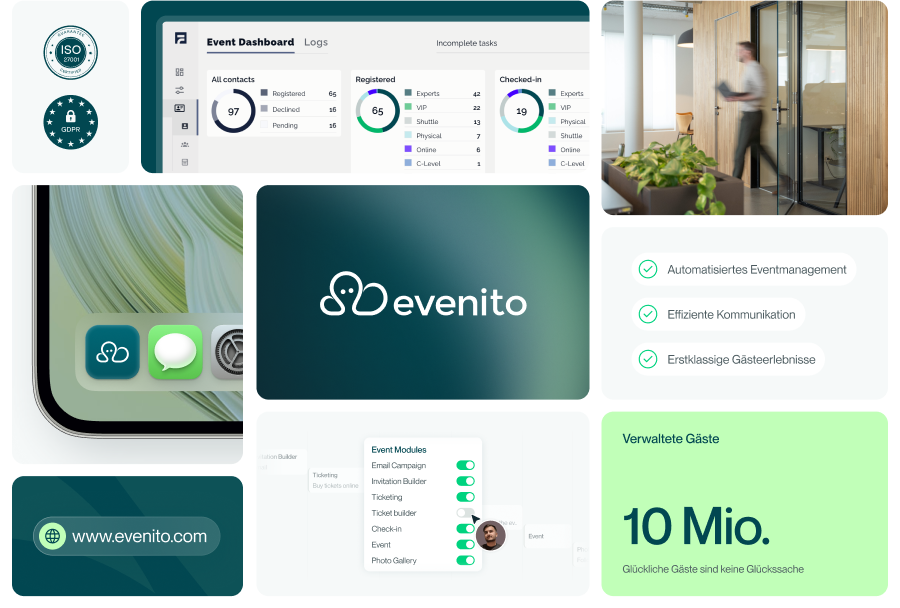
evenito combines the entire event lifecycle in a central platform, from registration and communication to streaming, check-in and evaluation. For enterprise teams in particular, evenito provides centralized control combined with decentralized implementation. This reduces complexity, makes work easier for event teams, ensures consistent processes and makes hybrid event programs scalable.
Evenito is very powerful but is very easy to use. At first glance, you have all the important figures and you immediately know where the status of the event is in relation to the participants. - Enrico, managing director from Germany
Conclusion: The right hybrid event software is a strategic lever
Choosing hybrid event management software is not just an IT decision, but it influences many factors. It is reflected in the quality of your participant experiences and also on the efficiency of the event teams. Integration into marketing and sales can also be improved as a result, as can the measurability of event ROI.
Especially for enterprise companies, the software is the infrastructure of the entire event strategy. Anyone who invests in the right platform today creates the basis for scalable event programs, better data, stronger customer relationships and more efficient internal processes.
Checklist: How to find the right solution
Finally, the most important criteria for you at a glance:
- Strategy for finding suitable software:
- Clear event goals defined
- KPIs and use cases defined
- Technology requirements:
- Scalable for large events
- Enterprise-grade security
- Deep integrations
- Technology requirements:
- Scalable for large events
- Enterprise-grade security
- Deep integrations
- Strong engagement features
- Personalization and branding
- Intuitive operation
- Quick event setups
- Support for multiple teams
- 24/7 support
- Onboarding and training
.svg)