Events as a strategic asset: From cost factor to growth driver
Just a few years ago, events were considered “nice-to-have” in many companies. They were an add-on to the marketing mix, often involved a great deal of effort and their success was usually difficult to measure. Today, this picture has fundamentally changed.
Events are no longer mere showcases or networking opportunities, but are becoming a key business driver: They promote customer loyalty, strengthen a brand's identity and can generate qualified leads.
Change of perspective: viewing events as touchpoints in the customer journey
A modern event is much more than a unique encounter. It is an important touchpoint in the customer journey that has a direct impact on ROI. Whether in a B2B or B2C environment, events enable brands to be experienced and people to build relationships that have an impact beyond the moment.
It becomes clear that the success of events is no longer measured exclusively by the number of participants. Rather, it depends on how intensive the interaction is, which contacts are actually relevant and what contribution an event makes to the long-term growth of the company.

New requirements for events: Branding, personalization and automation count
With this growing importance, expectations are also rising: participants want strong branding, a smooth and pleasant event experience, and a high level of personalization.
A standard “off the shelf” event is no longer enough to win over guests. At the same time, event teams are faced with the challenge of automating and scaling processes without sacrificing quality.
However, reality shows that in many companies, events are still managed using Excel lists and manual processes. This is not only inefficient, but also wasted potential to use events as real growth levers.
The solution: scalable events with evenito
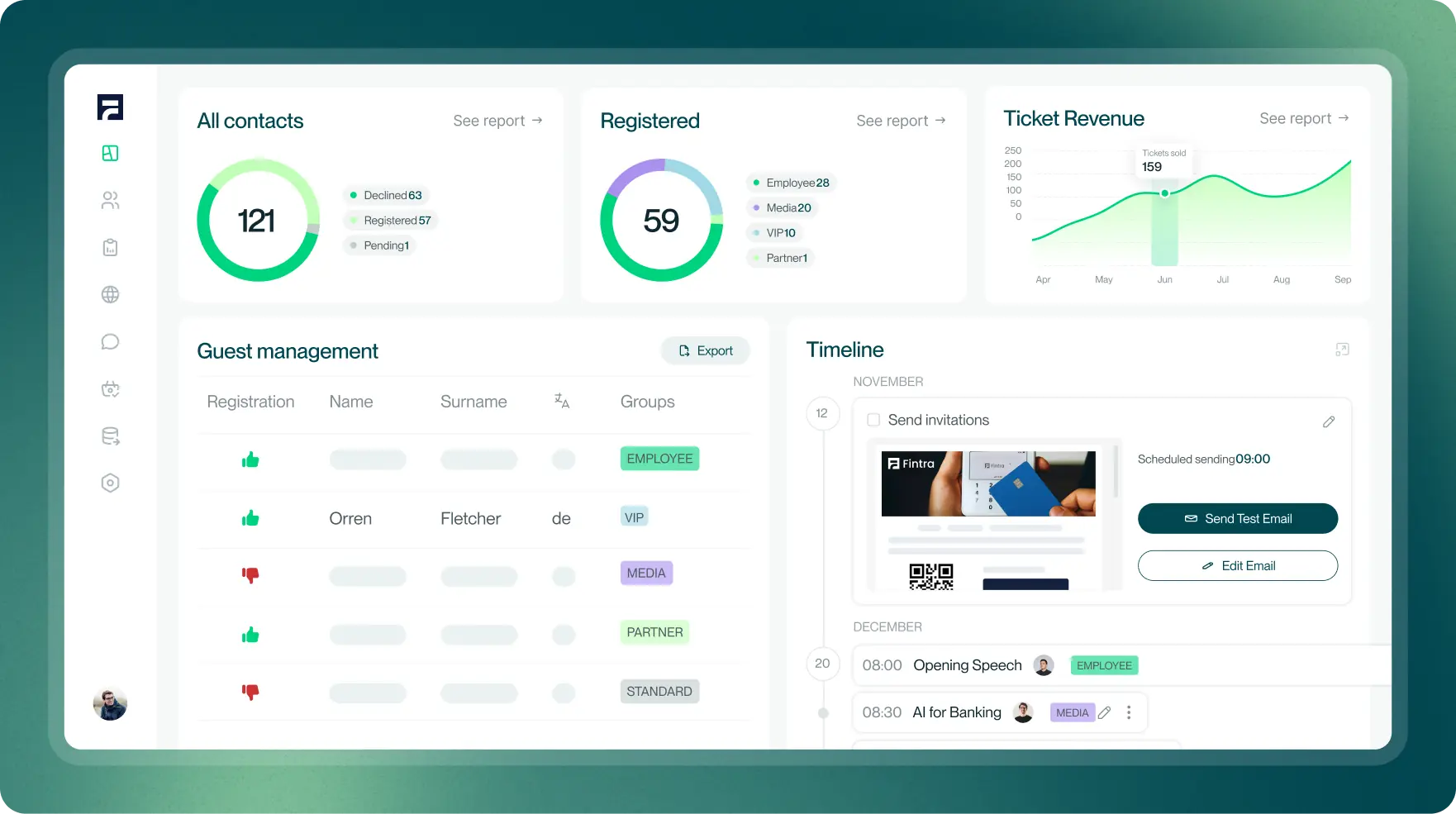
This is exactly where Evenito comes in. The event management software makes it possible to use events strategically, measurably and scalably in various areas:
- Branding: With flexible design options, event websites, email invitations and registration routes can be designed in a corporate look & feel.
- Personalization: Participants receive tailor-made journeys that range from invitation to check-in to follow-up.
- automation: Workflows such as reminder emails, guest list management or reporting run efficiently in the background.
- measurability: Real-time dashboards show how successfully an event is performing and provide valuable data for optimization.
This turns an administrative effort into an integrated growth strategy that seamlessly embeds events into marketing and sales.
Practical examples: Diversity with Strategy
Whether exclusive VIP events, large conferences or internal formats for corporate communications: Today, events can be used strategically in almost every sector of the company and offer numerous advantages:
- A VIP dinner creates proximity to important customers.
- A conference positions the company as a thought leader in the industry.
- Internal townhalls or roadshows strengthen employee loyalty to a company and support cultural change.
All formats have one thing in common: They do not work in isolation, but as part of a well-thought-out corporate strategy.
Events as an engine of growth
Events are no longer a cost factor that should be kept as low as possible. With the right tools and processes, they become a strategic asset that deepens customer relationships, makes brands tangible and generates leads.
Anyone who professionally manages events with a suitable platform transforms them from “nice-to-have” to growth drivers and thus unleashes a clear competitive advantage.
.svg)